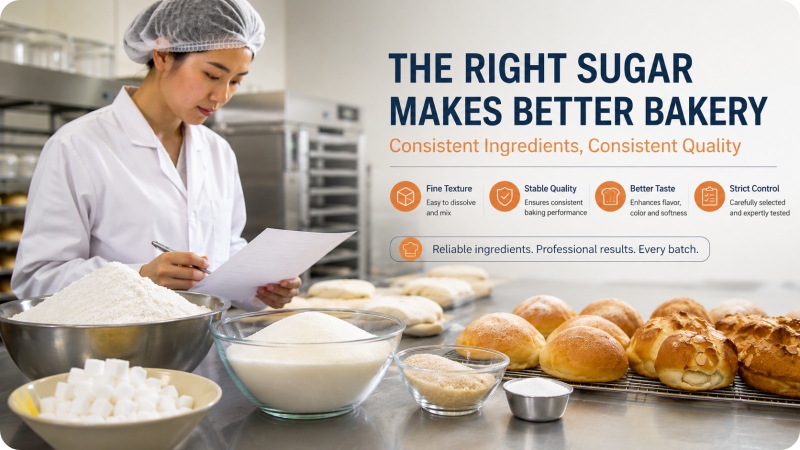
Sugar is often viewed as a sweetener, but in baking it does much more than add sweetness. It changes crust color, controls texture, affects yeast activity, helps retain moisture, and influences how products behave during mixing, proofing, baking, cooling, and packaging. In commercial bakeries, these effects become even more important because a small formula change can affect hundreds or thousands of finished products.
Whether a bakery produces bread, hamburger buns, cakes, cookies, sweet rolls, or packaged snacks, sugar must be controlled with the same discipline as flour, water, yeast, and temperature. Understanding how sugar works helps production teams improve consistency, reduce waste, and adjust formulas with confidence.
How Sugar Changes Color During Baking
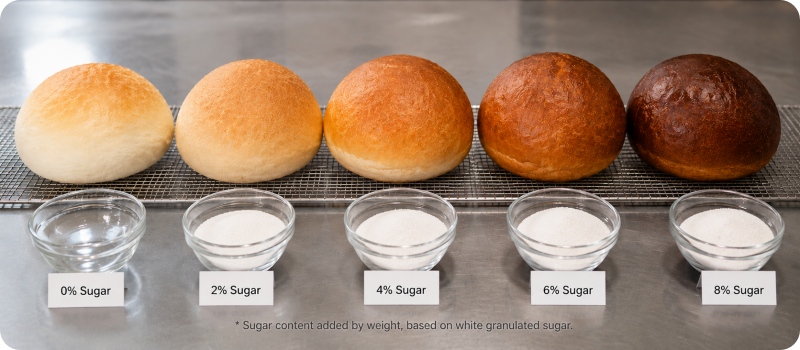
One of sugar's most visible effects is color. During baking, heat causes sugars to break down and react with proteins and amino acids in the dough or batter. This contributes to crust browning and the rich golden color that customers associate with freshness and flavor. Two important processes are caramelization and the Maillard reaction.
Caramelization happens when sugar is heated enough to develop deeper color and flavor. The Maillard reaction involves sugars and proteins reacting together, creating complex browning and roasted notes. In bread and buns, these reactions help form an attractive crust. In cakes and cookies, they influence surface color, aroma, and perceived quality.
If sugar levels are too low, products may look pale even when fully baked. If sugar levels are too high, the crust can darken too quickly before the inside is properly baked. This is why commercial bakeries must balance formula design with oven temperature, baking time, steam, and airflow.
How Sugar Affects Texture
Sugar changes texture by competing with flour and starch for water. When sugar dissolves, it holds moisture in the dough or batter. This can make products softer, more tender, and slower to dry out. In cakes, sugar helps create a fine crumb and pleasant mouthfeel. In cookies, it affects spread, crispness, and chewiness. In sweet bread, it contributes to softness and shelf life.
However, too much sugar can weaken structure. Because sugar attracts water, it can slow gluten development and delay starch gelatinization. The result may be a product that is tender but less stable. In bread production, high sugar formulas often need adjusted mixing time, stronger flour, controlled proofing, or more careful baking to maintain volume and shape.
For factories, texture control is not only a recipe issue. Equipment also matters. Mixers must develop dough evenly. Proofers must provide stable humidity and temperature. Ovens must deliver enough heat to set the structure without over-coloring the crust. Sugar makes these controls more sensitive, especially in enriched doughs.
Different Sugars Produce Different Results
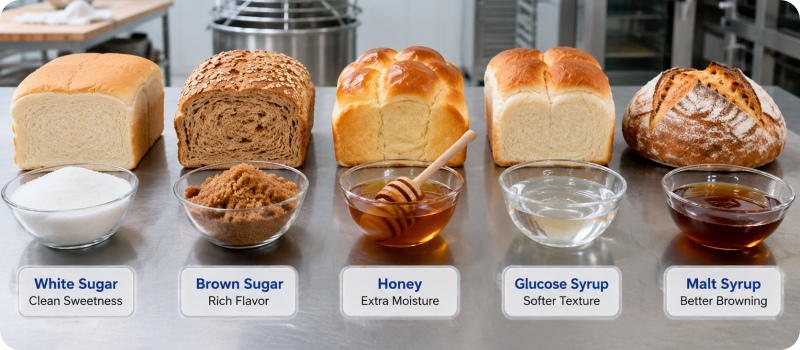
Not all sugars behave the same way.
Choosing the right sugar depends on the desired product characteristics rather than sweetness alone.
Practical Tips for Commercial Bakeries
Successful recipe reformulation requires balancing multiple variables together.
Common Mistakes When Using Sugar
Several production problems can be traced to improper sugar management.
Recognizing these interactions helps bakers make informed adjustments instead of solving problems through trial and error.
Looking for More Consistent Baking Results?
With 47 years of manufacturing experience and exports to 120+ countries, we help bakeries improve product consistency and production efficiency.

HONGLING provides complete bakery solutions including: • Dough Sheeters • Dough Proofers • Rotary Rack Ovens • Deck Ovens • Spiral Mixers • Cooling Solutions
Contact our team today to discuss your bakery project and receive a customized solution.
subscribe to us, you can get our latest product content, exclusive news reports and updates, the latest local events


online service






 +8613066853339