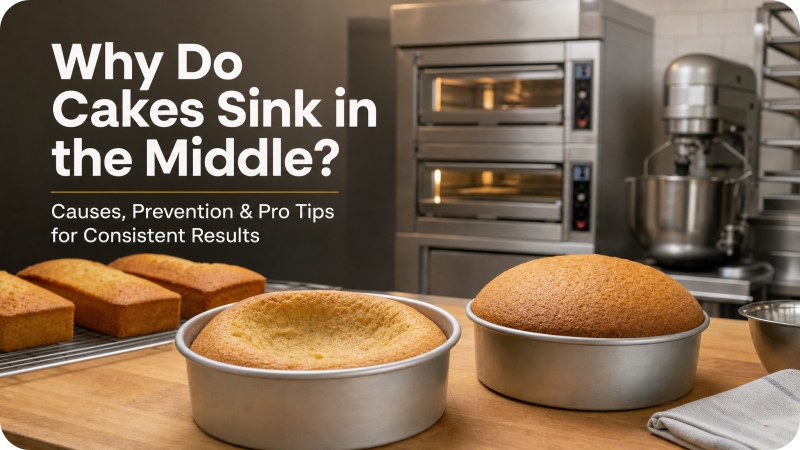
A cake that sinks in the middle is frustrating in any bakery, but in commercial production it becomes a cost and consistency problem. A few failed cakes may be manageable during recipe testing. Repeated center collapse across trays, racks, or shifts can lead to product waste, delayed orders, and difficult quality conversations with distributors or retail customers.
The center of a cake usually sinks when the internal structure cannot support itself after rising. That weakness may come from the formula, batter mixing, leavening control, oven temperature, baking time, cooling, or equipment consistency. The good news is that most causes can be diagnosed systematically. Instead of blaming a single ingredient, bakeries should look at the full process from scaling to cooling.
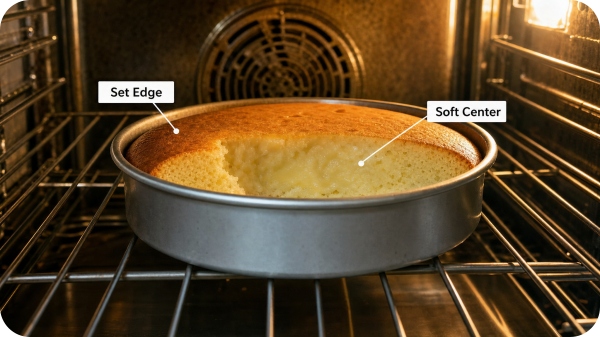
A cake rises because air cells and leavening gases expand in the heat of the oven. At the same time, proteins coagulate and starches gelatinize, creating the structure that holds the cake's shape. If the cake rises but the center does not set before it is removed from the oven, the middle can collapse as the product cools.
This is common when bake time is too short, the pan is too deep, the batter load is too heavy, or the oven temperature is uneven. The edges receive heat first, so they may look done while the center is still unstable. In a production setting, internal temperature checks, cut tests, and consistent pan fill weights are more reliable than judging only by surface color.
The Batter Was Overmixed or Undermixed
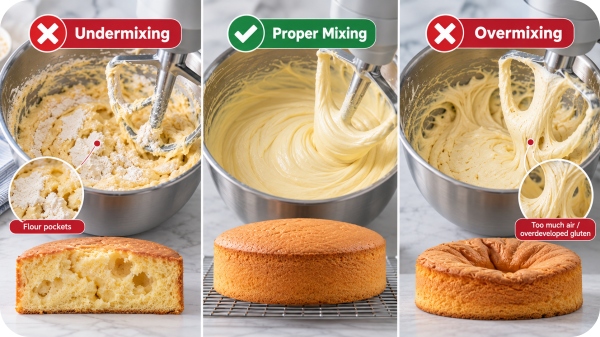
Mixing controls aeration and batter structure. Overmixing can create too much air or overdevelop gluten in formulas containing wheat flour. The cake may rise quickly, then sink because the cell walls are weak or stretched. Undermixing can create uneven ingredient distribution, leaving pockets of flour, fat, sugar, or leavening that bake at different rates.
For commercial bakeries, the issue is often not the recipe itself but inconsistent mixing time, bowl loading, tool speed, or batch size. A planetary mixer, for example, must be matched with the correct agitator, speed, and scraping routine. Scaling a recipe from a test kitchen to production also changes mixing energy, so the original time may not translate directly.
Oven Temperature and Heat Distribution Were Unstable
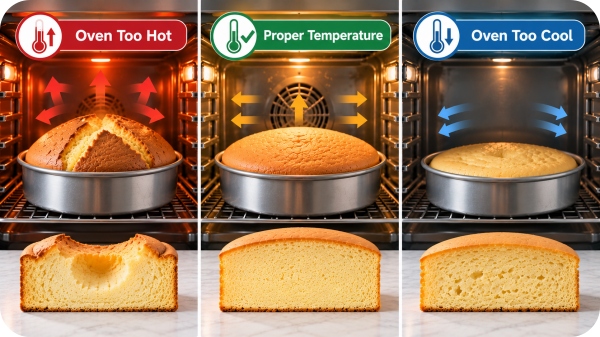
Oven control is one of the most important factors in preventing sunken cakes. If the oven is too hot, the outside sets quickly while the center remains underbaked. The cake may dome early, crack, and later collapse. If the oven is too cool, the batter may rise slowly and lose gas before the crumb structure becomes firm.
Uneven heat distribution can create different results on the same rack or deck. Cakes near the door, fan path, or overloaded area may bake differently from cakes in the center. This is why commercial bakeries monitor actual oven performance, not just the set temperature. Rack rotation, pan spacing, loading density, and oven recovery after door opening all matter.
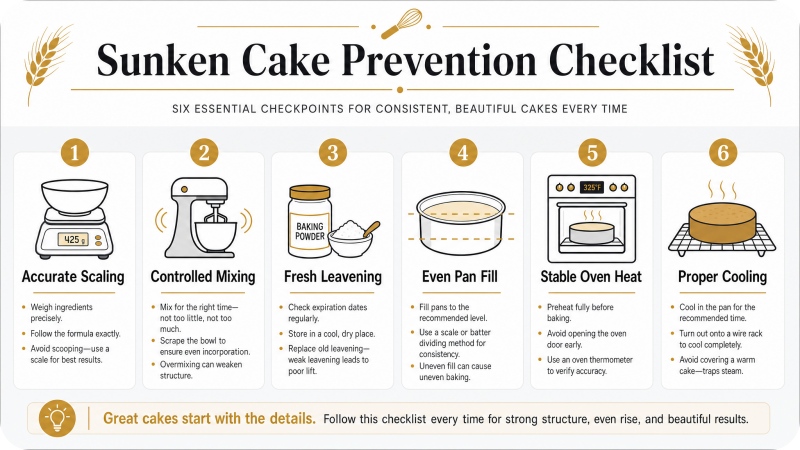
How Commercial Bakeries Can Prevent Sunken Cakes
Standardize Scaling and Batter Weight
A consistent cake begins with accurate scaling. Ingredient weight, batter temperature, and pan fill weight should be recorded for each batch. If the pan is overfilled, the center takes longer to set and is more likely to sink. If the fill weight varies across trays, the bakery may see mixed results even when the oven program is correct.
Control Mixing Time and Speed
Mixing procedures should specify agitator type, speed, time, bowl load, scraping steps, and batter temperature. Operators should not rely only on habit or visual judgment. For high-volume production, a small change in mixing energy can change batter density enough to affect rise and collapse.
Verify Oven Performance
Use product tests and oven checks together. A stable oven should deliver repeatable heat across racks, trays, or deck positions. If sinking appears in a pattern, such as only on the top rack or near the oven door, the issue may be airflow, heat recovery, or loading practice rather than the recipe.
Cool Cakes Correctly
Cooling matters because the cake structure continues to stabilize after baking. Rough handling, early depanning, cold drafts, or stacking hot cakes can damage structure and trap moisture. Cooling racks, spacing, and timing should be part of the production SOP, especially for soft sponge cakes and high-moisture formulas.
Conclusion
Cakes sink in the middle when the product rises but the structure cannot hold. The cause may be underbaking, unstable oven heat, overmixed batter, weak or excessive leavening, inaccurate scaling, heavy pan fill, or poor cooling. In commercial production, these factors often interact, so the best solution is a process review rather than a quick guess.
By controlling batter preparation, pan filling, oven performance, and cooling conditions, bakeries can reduce center collapse and improve product consistency. For growing bakeries, reliable mixers, ovens, and production SOPs are not only equipment choices. They are quality control tools that protect yield, appearance, and customer trust.
FAQ
Why does my cake sink after it comes out of the oven?
The center usually sinks because the internal crumb structure was not fully set before cooling. Underbaking, too much leavening, unstable oven temperature, or overmixed batter can all create a cake that rises but cannot hold its shape.
Can overmixing make cakes sink in the middle?
Yes. Overmixing can add too much air or develop the batter structure in the wrong way, depending on the formula. The cake may rise quickly in the oven and then collapse when the air cells weaken.
Does too much baking powder cause a sunken cake?
Too much baking powder can create excessive gas expansion before the crumb has set. This can cause a high early rise by center collapse. Accurate scaling and ingredient control are important in commercial production.
How does oven temperature affect cake collapse?
If the oven is too hot, the outside may set before the center is baked. If it is too cool, the batter may lose gas before it becomes firm. Both conditions can lead to sinking or uneven cake height.
Looking for More Consistent Baking Results?
With 47 years of manufacturing experience and exports to 120+ countries, we help bakeries improve product consistency and production efficiency.

HONGLING provides complete bakery solutions including: • Dough Sheeters • Dough Proofers • Rotary Rack Ovens • Deck Ovens • Spiral Mixers • Cooling Solutions
Contact our team today to discuss your bakery project and receive a customized solution..
Related Articles
Baking Soda vs Baking Powder vs Yeast: What's the Difference?
Deck Oven vs Convection Oven vs Rotary Rack Oven
Why Is Bread Crust Color Uneven?
Spiral Mixer vs Planetary Mixer: Which One Does Your Bakery Need?
subscribe to us, you can get our latest product content, exclusive news reports and updates, the latest local events


online service






 +8613066853339